
初代吸血鬼
China-made EVs win a growing number of European consumers, despite EU’s levying unfair tariffs_我的网站

一 |
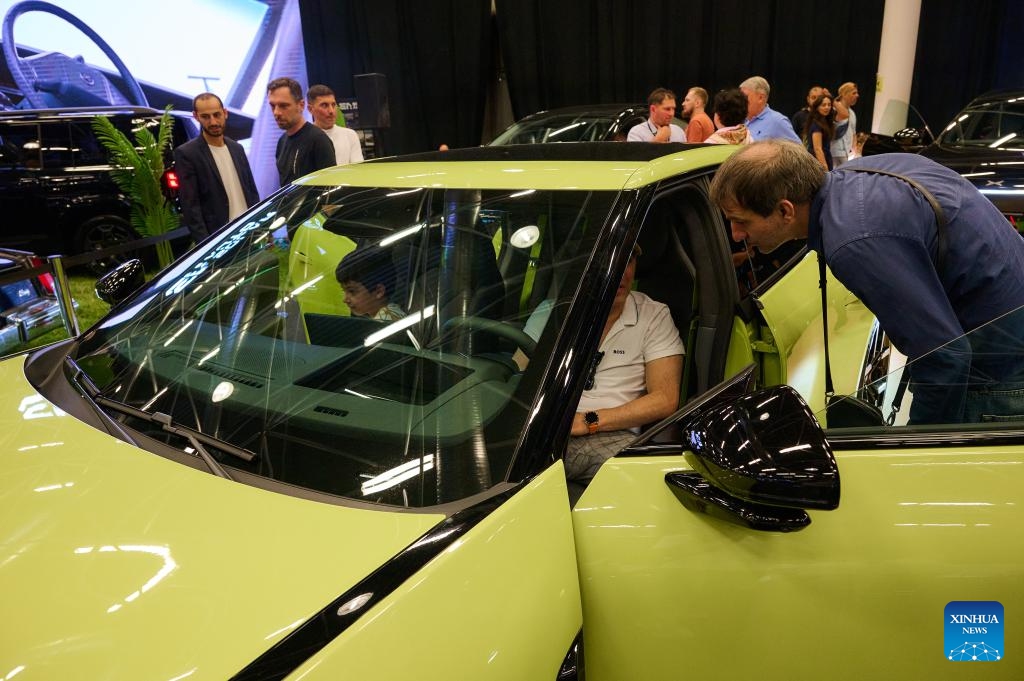
China-made electric vehicles (EVs) accounted for 14.2 percent of European market sales in the first five months of 2026 despite the EU's steep tariffs. The growth showed that trade‑protectionist barriers can only serve as short‑lived obstacles, as consumers' purchasing choice ultimately hinges on product competitiveness and China's EV strengths will support the automakers' long‑term growth, Chinese experts said.
The market share of electric cars sold by Chinese companies rose to 14.2 percent in European market in the first five months of this year, according to Schmidt Automotive Research. The 171,800 EVs sold there represented an increase in market share of five percentage points from one year earlier, the Guardian reported on Sunday.
The increase in European sales comes despite EU tariffs of up to 35.3 percent for EVs made by some Chinese manufacturers, on top of the standard 10-percent import duty. The UK is the largest European market for Chinese cars because London has declined to follow the EU's lead in imposing more levies. The UK accounted for a quarter of Chinese EV sales in Europe, according to the report.
Cui Dongshu, secretary-general of the China Passenger Car Association, told the Global Times on Monday that the surge showed trade protectionist policies have failed to contain Chinese automakers' overseas expansion.
Chinese EVs enjoy "a generational edge" over Europe's legacy carmakers. Their overall product strength remains the primary reason behind their popularity among European buyers, Cui said.
Meanwhile, fluctuating global oil prices have pushed up driving costs throughout Europe, fueling demand for affordable electric vehicles, a need well‑met by the affordable Chinese‑made models. Meanwhile, the gradual return of European electric‑vehicle purchase subsidies has lowered purchase barriers and lifted total EV sales, which has in turn worked to the advantage of Chinese exporters, Cui Dongshu said.
Chinese brands expanded their market share in Europe in the first half of 2026 driven by local subsidies and higher oil prices, Fitch Ratings said in a report sent to the Global Times.
The combined market share of leading Chinese brands in the EU, European Free Trade Association and UK rose to 11 percent in the first half of this year, up from 7 percent in the first half of 2025. The largest Chinese players, Geely Group (including Volvo Car) and SAIC Motor, expanded steadily despite the tariffs. The main drivers of market share gains were BYD, Chery and Leap Motor, according to Fitch Ratings.
Cui Dongshu noted that China's EV edge comes from its full‑fledged industrial ecosystem.
Officials from China's Ministry of Commerce told a press conference on July 28 that China boasts a complete, high‑efficiency EV industrial chain covering raw materials, auto parts, finished cars and production equipment, with industry clusters enabling rapid component supplies. China's huge market, the world's largest, has fueled 11 consecutive years of EV sales.
"Protectionism can only put up short‑term entry barriers. It cannot erase the solid strengths of Chinese EVs or stop Chinese brands from establishing a lasting foothold in Europe," Cui Dongshu said.
Yet, geopolitical risks remain as the EU reportedly considers expanding tariffs to restrict Chinese plug-in hybrid EVs.
German media Handelsblatt reported on June 19 that the EU is drawing up new measures to shield its single market more tightly against Chinese imports in the near future, citing senior EU officials and industry insiders. Specifically, the plan could contain countervailing duties to be levied on Chinese‑made plug‑in hybrids.
The rising market share of Chinese‑brand EVs amid EU tariffs has demonstrated that trade barriers cannot distort market choices. If the EU carries out its planned countervailing duties on Chinese plug‑in hybrids, the measure will yield only limited results, Cui Hongjian, a professor at the Academy of Regional and Global Governance at Beijing Foreign Studies University, told the Global Times on Monday.
Europe's problems stem from weak competitiveness and flawed energy policies. The EU ought to cast aside its confrontational mindset, remove unfair restrictions and pursue consultations and cooperation with China. Shifting industrial‑sector conflicts outward cannot remedy the weaknesses of its EV sector and will only damage the EU's reputation for destroying free trade, Cui Hongjian said.
。
阿里云优惠券 先领券再下单 话说咱们做拼多多的商家,新开了一家店铺,噼里啪啦的上完一通链接,开车推广之后。这个店铺未来的结局却只有2种:成功起店或者最终闭店。 什么是成功起店呢?要么有单量了,要么有利润了,店铺有盼头了就是成功起店了。

二 | 而最终闭店的呢,无一例外,没单或者不赚钱,最终选择了闭店,眼不见心不烦。 我做拼多多这么多年,接手过数不清的店铺,做起来的不少,没做起来的也有那么一些。

三 | 俗话说:前事不忘,后事之师。 不管是做起来的店铺,还是没做起来的店铺,但凡有了最终结果,咱都会做以分析总结,比如这个店做高价做起来了,怎么做起来的。这个店卖价那么低了,竟然没做起来,是什么原因导致的。 正是因为有了这些经验教训,我做代运营,每当接手一个新店时,就会自动的将其与过去接的店铺做匹配,看这个店属于哪一类,应该采用哪种店铺模型能做起来。今天我就把我成功起店的几种模型,也就是底层逻辑,简单的跟大家分享一下。 01 不同店铺不同的起店模型 以我目前接的店铺为例,咱们所有做拼多多的,不管是厂家还是代理,不管是自研还是贴牌,所上的链接可以分为8种类型:品牌和白牌的高客单高利润,高客单低利润,低客单高利润,低客单低利润。 这里高客单和低客单是按产品卖价来分的,我认为的高客单就是单价在七八十以上的,剩下的就是低客单。而同样的客单价为什么会有高利润和低利润呢?比如高客单的低利润怎么解释?因为我做过哇。成本90的品,我卖价100块,这不就是低利润吗? 链接本身的4种类型,加上品牌与白牌的区分,衍生成8种类型,就会使得我们在起店的过程中,由于起店模型不匹配,导致起店不成功。

四 | 我举几个最近接的产品为例:一个品牌防晒霜,一个白牌香水,一个源头水果,一个品牌3C数码。品牌防晒霜属于低客单,白牌香水属于低客单,源头水果也是低客单,3C数码高客单。3个低客单,1个高客单,但是利润就不一样了。

五 | 利润有多少呢?这个就是我来定的了。

六 | 因为定价决定玩法,玩法就是起店模型,定价对了,玩法对了,起店模型对了,才能成功起店。就说品牌防晒霜,由于官方控价,有个统一指导价,毋庸多言,直接玩强付费。这种起店模型,就是低价高利润+强付费。 我接手的非源头品牌类的商品都是这样起店的,想换个思路,玩低利润,不好意思,没跑通,直通车没有空间去烧,低价还拿不到单量。 在说白牌香水,这个品不控价,成本低,可操作空间就大了,有高利润+强付费,低利润+微付费,低利润+自然流,三种起店模型可以选。 选哪个呢?很好理解,排除法,低利润+自然流的直接剔除,因为市场容量不大,玩不了自然流。那就只能在强付费和微付费两种起店模型里面去选了,两种方式我都试过,跑出来的效果确实不一样。

七 | 再说源头水果和3C数码,这2个类目的体量和价格完全不一样,成本也不一样。起水果用的是哪个模型,限额+自然单。3C数码呢,还是常规玩法:强付费。 这只是随便举的几个店铺例子,实际我们接的品可是五花八门的,品不一样,市场容量不一样,产品成本也有高有低,我们就会根据体量+成本+商品属性,来判断用怎样的起店模型来起。 经验只会提高把一件事做成功的概率,最终能不能起店成功,还有很多其他因素会影响结果。就比如通过最近起的同品多店来分析,我就发现了,新店和老店的权重不一样,有数据的老店和没数据的老店权重不一样。因为同样的素材,在有的店里死活没数据,换个店去推,竟然能爆单,你猜这是啥原因呢? 02 起店模型的测试之路 看上面说的结果感觉拼多多起店好像很容易,找对了起店模型,起店应该会很轻松吧。对对对,就跟迷宫一样,找到出口了走出迷宫自然是很容易的。 但问题的难点就在于:这个店铺在你手里,你怎么知道哪个起店模型能跑的通呢?这就需要来测了,而这个测试过程才是真正折磨人的。 再举一个例子,我们接的某入口类的吃的品。成本一般,我们就想着,市场不大,那就玩强付费,预计也能拿到些单量。然后做了三十条链接,玩强付费开车,结果咋样。一周了,店铺就出了几单。 这样下去可不行哇,没办法跟甲方交代,一个是单量少,二是每天空烧把投产比都烧到了1以下了。要赶快的调整策略,咋做呢?那就玩低价微付费了,咱们价格降了还怕没单吗?说干就干,第二批三十条链接又上架了,这已经是2周后了。 上架之后继续开车,按保本投产比开,怎么说呢,要说没单吧,每天也能稳定出个几单,要说爆单吧,就跟站在地球看月球似的,感觉十分的遥远。 这样也不行,那怎么办?单链接限额亏损拉权重,玩低利润强付费。用这种方式,又过了半个月,总算做到单量单日破百了,且是亏钱的。至于盈利嘛,反正3个月之后拖价成功,目前已经开始盈利了。 为什么要举这个例子,因为他的结果是好的,就跟大团圆的电视剧一样,这个店铺从一开始的起不来量,到最终盈利,圆满了。看到没,起店模型的测试之路是不是十分的坎坷。

八 | 如果最终拖价导致没单了,说明限额亏钱拉权重的起店模型也跑不通,那我们就要继续去测其他起店模型了,这就是我们做拼多多每天做的最多的事,测!测!测! 03 最后 能够快速的测通起店模型是一件幸事,我们接的一半的店铺一开始就跑通了,做起来也轻松。还有一半店铺真的要花时间去测,如果要测价格带,那个周期会更久,不是我们上链接慢,是系统修正人群至少1周时间,还有换品来推的,那个人群修正的周期就更更久了。

九 | 要说拼多多起店成功率能不能做到100%呢?我觉得能。但要加一个前提条件,有充足的时间来测。一周跑不通,那就跑一个月,一个月跑不通,那就跑一年,一年不行,就五年。

十 | 那么问题来了,有哪个老板会给大家五年的时间去起店?所以,才会出现最终闭店的情况。那么,终极问题来了:如何最短时间内找到适合你们品的起店模型呢? 作者:老虎讲运营,运营书籍《全栈运营高手》作者;电商运营推广大牛,千万流水项目操盘手,多平台专栏作家,专注产品运营与推广,擅长品牌打造和爆款链接制造,号称电商运营界扛把子。
申请创业报道,分享创业好点子。点击此处,共同探讨创业新机遇!。
Current article:http://6ys5.xiongpeiduanlouduoennongleng.cyou/98hr/62f.html
Published on:10:57:51